Coconut Cream Packaging Formats: Aseptic Carton, Can, Pouch and Foodservice Bag
Packaging coconut cream is not only a filling decision. For a coconut processing plant, the right format depends on upstream extraction, solids management, viscosity control, heat treatment, separation behavior, and how consistently each batch runs through the filler.
Enzymereach works as an enzyme supplier for coconut processing teams that need the cream side of the line to behave predictably before it reaches the package. Better control before filling helps reduce filtration load, stabilize flow, protect yield, and keep commercial formats aligned with export, retail, and foodservice requirements.
The packaging decision starts before the filler
Coconut cream carries fat, fine fiber, proteins, suspended solids, and natural variability from raw material. Those variables affect every packaging format differently.
For B2B processors, the critical questions are direct:
- Will the cream hold its target texture after thermal processing?
- Will fine solids create sediment, straining pressure, or filling inconsistency?
- Will viscosity drift between the first and last pallet of a production run?
- Will the package protect the product for the intended channel and shelf life?
- Will the line maintain throughput without excessive recirculation, downtime, or rework?
Enzyme-supported processing can help plants manage extraction and texture upstream, especially where coconut solids and fibrous material influence yield, separation, and filtration demand.
Format 1: Aseptic carton
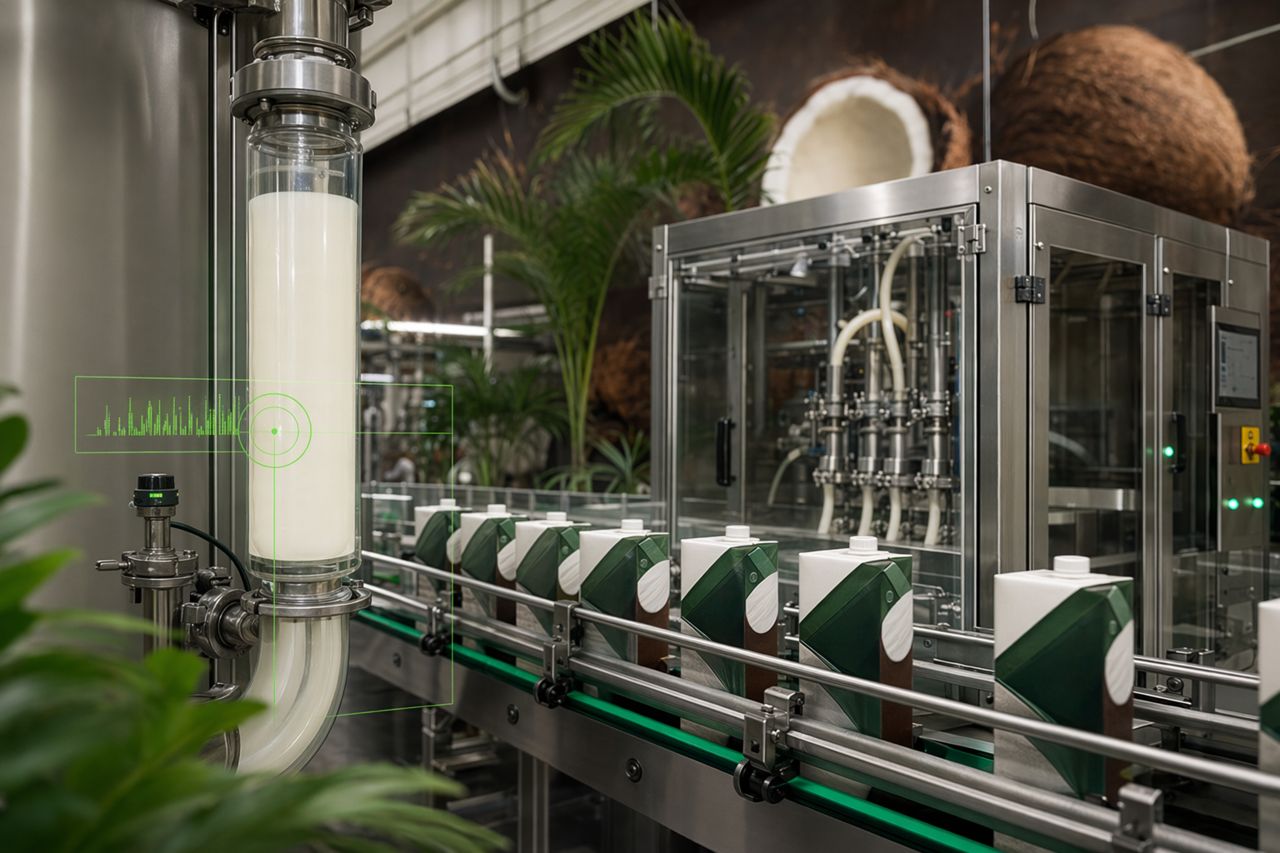
Aseptic cartons are common for export, retail, and ingredient buyers that want ambient distribution with a clean, modern shelf presentation.
Where aseptic carton works best
- Retail coconut cream for ambient shelves
- Export SKUs where freight efficiency matters
- Ingredient packs for manufacturers needing consistent pourability
- Private-label programs with multiple pack sizes
Operational advantages
Aseptic cartons are lightweight, efficient to palletize, and strong for brand presentation. They can reduce handling weight compared with cans and support rectangular logistics efficiency.
Processing pressure points
Carton lines require controlled viscosity and stable product flow. Coconut cream that thickens unpredictably, carries excess fine solids, or separates unevenly can increase filler stress and create quality variation.
For processors, the key is to prepare the cream so it enters thermal treatment and filling with a narrow, repeatable behavior range. Enzyme solutions may support this by helping manage plant fiber effects, improving extractability, and reducing unnecessary load before final stabilization.
Format 2: Can
Cans remain a strong choice for retail, export, and traditional coconut cream markets. They are durable, familiar, and accepted across many regions.
Where cans work best
- Retail coconut cream and coconut milk ranges
- Long-distance export programs
- Markets where metal packaging is the category norm
- Applications requiring high physical package protection
Operational advantages
Cans tolerate tough distribution conditions and provide excellent physical protection. They are widely understood by distributors and foodservice buyers.
Processing pressure points
Canned coconut cream must withstand retort or equivalent heat treatment without unacceptable separation, curdling appearance, or texture instability. If upstream extraction leaves too much variable fiber or inconsistent solids distribution, the finished can may show batch-to-batch differences.
Plants targeting canned formats should focus on cream standardization before filling. Consistent extraction, controlled viscosity, and efficient removal or management of insoluble material help protect appearance and reduce rework risk.
Format 3: Flexible pouch
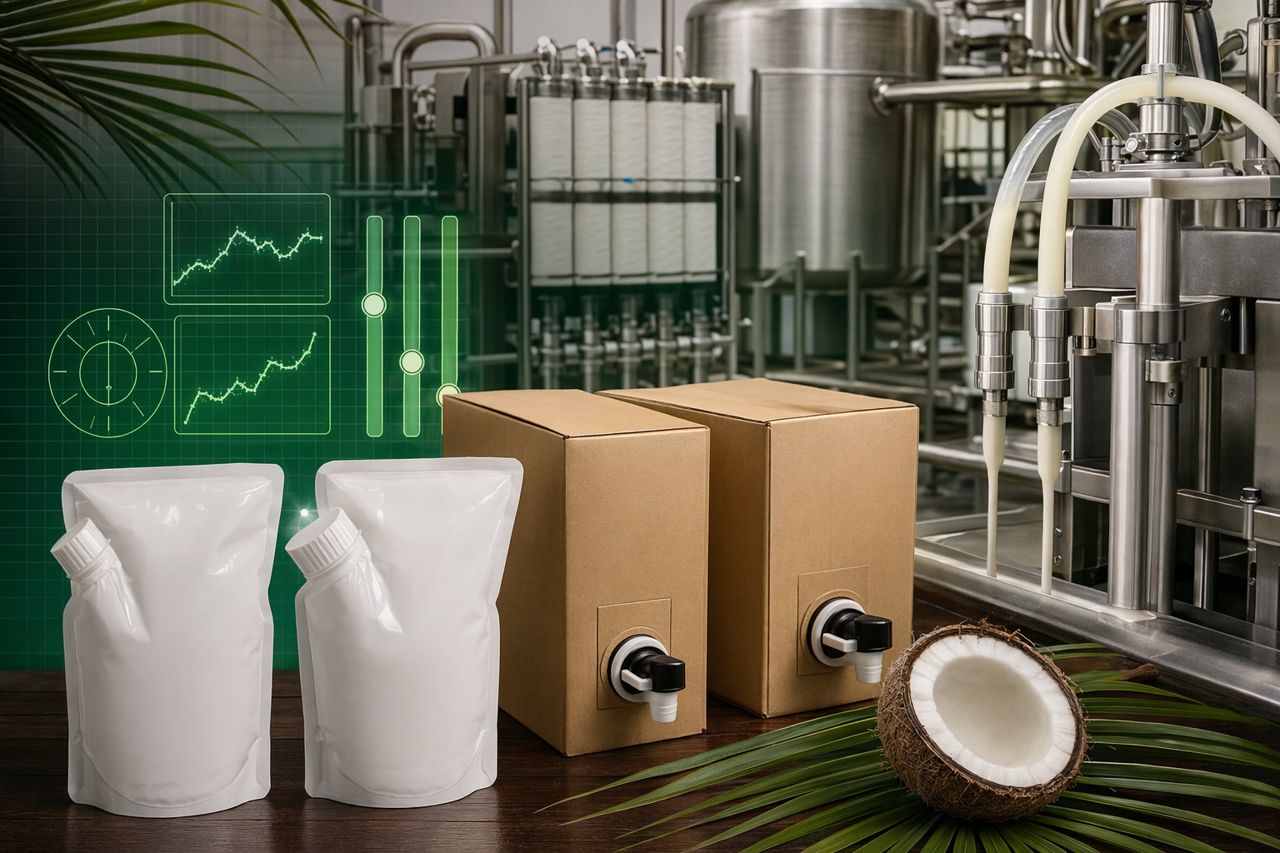
Pouches are gaining ground where processors want lighter packaging, improved pack-out efficiency, and convenient handling for retail or ingredient use.
Where pouches work best
- Retail packs with modern shelf appeal
- E-commerce or lightweight distribution models
- Portion-controlled culinary applications
- Ingredient packs where empty-pack disposal matters
Operational advantages
Pouches reduce packaging weight and can improve storage efficiency. They also offer strong graphic areas and convenient consumer handling.
Processing pressure points
Pouch filling is sensitive to product flow, seal area cleanliness, and particulate control. Coconut cream that carries inconsistent fiber or viscosity spikes can challenge dosing accuracy and seal reliability.
For pouch programs, upstream process discipline is especially important. Enzymatic treatment can be part of a controlled preparation strategy to reduce fibrous interference, improve smoothness, and keep filling behavior more predictable.
Format 4: Foodservice bag
Foodservice bags, including bag-in-box systems, are built for kitchens, beverage chains, industrial users, and bulk culinary operators.
Where foodservice bags work best
- Restaurant and catering supply
- Beverage bases and dessert production
- Industrial ingredient use
- High-volume customers that need fast dispensing
Operational advantages
Foodservice bags reduce unit handling compared with small retail packs and support efficient dispensing. They are practical where buyers value performance over shelf display.
Processing pressure points
The buyer expects the product to dispense cleanly, mix quickly, and remain consistent throughout use. If the cream separates heavily, thickens in storage, or carries visible sediment, the customer sees it immediately.
For processors, this format rewards tight control over emulsion behavior, fiber load, and batch consistency. The plant must produce a cream that performs in the operator’s kitchen, not only in the factory quality check.
Quick comparison for coconut cream processors
| Format | Best channel fit | Main plant concern | Commercial advantage |
|---|---|---|---|
| Aseptic carton | Export, retail, ingredient | Viscosity and filler stability | Ambient logistics and modern shelf format |
| Can | Retail and export | Heat stability and appearance | Durable, familiar, widely accepted |
| Flexible pouch | Retail, e-commerce, portions | Flow control and seal consistency | Lightweight, convenient, efficient pack-out |
| Foodservice bag | Kitchens and industrial users | Dispensing behavior and separation control | Bulk handling and operator efficiency |
How enzymes connect to packaging performance
Packaging cannot correct an unstable cream. It can only contain the product the process delivers.
In coconut processing, enzyme solutions may support:
- Improved release of extractable coconut solids during preparation
- Lower resistance from fibrous material during separation or filtration
- Smoother flow behavior into downstream equipment
- More consistent viscosity across production batches
- Reduced strain on polishing, screening, and filling stages
- Better repeatability when raw coconut quality changes by season or origin
The practical value is not abstract chemistry. It is fewer avoidable disruptions between extraction and filling, with a product that behaves closer to target when the package format changes.
Selecting the right format for your commercial plan
Use the market requirement first, then validate the process.
Choose aseptic carton when
Your buyers need ambient distribution, efficient export packing, and retail-ready presentation. Confirm that your process can maintain smooth flow through thermal treatment and carton filling.
Choose can when
Your market expects a traditional, robust pack with strong shelf confidence. Confirm that texture and appearance remain stable after heat treatment.
Choose pouch when
You need lightweight packaging, flexible pack sizes, and strong convenience. Confirm that viscosity, solids, and filling accuracy remain under control.
Choose foodservice bag when
Your customers use coconut cream in volume and care about dispensing, mixing, and kitchen reliability. Confirm that separation and sediment are managed across storage and use.
Process questions to answer before you lock the package
Before committing to tooling, film structures, carton suppliers, or can specifications, run the product through a process reality check:
- Is the extraction stage giving consistent cream quality from lot to lot?
- Are fiber and fine solids increasing filtration load or causing filler variation?
- Does viscosity stay within the plant’s target handling window?
- Does the cream recover predictably after pumping and heat exposure?
- Does the filled product match buyer expectations after storage and transport?
- Can the same upstream process support multiple formats, or does each SKU need a tuned approach?
These questions help prevent a packaging project from becoming a downstream troubleshooting exercise.
Where Enzymereach fits
Enzymereach supports coconut processing plants that want enzyme selection aligned with production reality: yield, separation, viscosity, filtration load, and repeatable filling behavior.
We help technical and commercial teams think through the relationship between raw coconut variation, process conditions, and the final pack. The goal is a smoother route from extraction to saleable coconut cream, whether the target is carton, can, pouch, or foodservice bag.
Request a quote
If you are planning a coconut cream packaging program or troubleshooting flow, separation, or batch consistency before filling, send your process details through the on-site request form.