Coconut Processing Wastewater: Practical Ways to Reduce Organic Load
For a coconut processing plant, wastewater is not only an end-of-pipe issue. Organic load starts earlier: at the grinder, extractor, separator, filter, holding tank, filler, and clean-in-place cycle. When coconut solids, residual fat, starch-rich fines, and proteinaceous material leave the process as drain loss, the wastewater plant has to absorb the cost.
Enzymereach is an enzyme supplier for coconut processing teams that want cleaner separation, more controlled viscosity, lower filtration stress, and more predictable batches. The same production discipline that improves yield can also reduce what is lost to wastewater.
Where organic load comes from in coconut processing
Coconut wastewater often carries a mixed burden:
- Fine coconut fiber escaping screens or decanters
- Suspended cream, oil, and emulsified fat
- Residual extractable solids from press cake
- Diluted coconut milk or cream from line changes
- High-strength wash water from tanks, presses, filters, and separators
- Product residues pushed to drain during rushed cleaning or poor recovery steps
The result is higher COD, higher BOD pressure, more sludge, odor risk, unstable treatment performance, and avoidable disposal cost. A practical reduction program starts by keeping valuable solids and fat in the product stream, not by asking the wastewater plant to fix every process loss.
Start with press cake discipline
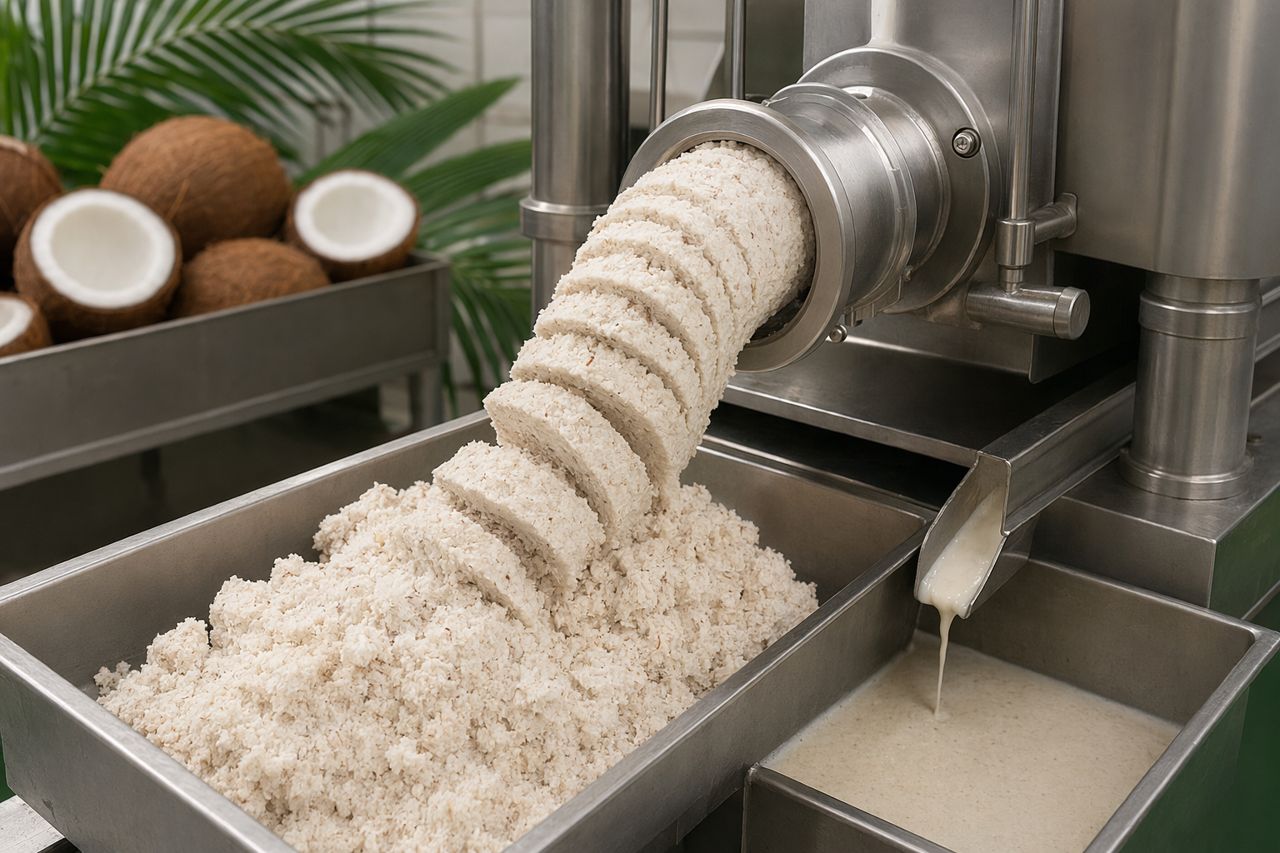
Press cake is one of the most important control points. If extraction is uneven, cake leaves the line carrying recoverable cream, soluble solids, and trapped moisture. That lost material can become wastewater load during cake handling, floor washdown, and equipment cleaning.
Useful plant actions include:
- Standardizing feed particle size before extraction
- Avoiding overloading presses or extractors beyond stable residence behavior
- Monitoring cake texture visually and by routine plant checks
- Segregating wetter cake for review instead of letting it enter general waste handling
- Reviewing enzyme-supported extraction when cake retains too much recoverable material
In coconut milk and cream operations, targeted enzymatic processing can help open the fiber-rich matrix and support more consistent release of extractable material. The production goal is straightforward: recover more into the intended stream and leave less organic material for drains and wash water.
Manage wash water like a process stream
Wash water becomes expensive when it is treated as unlimited. In many plants, high organic load comes from short but intense events: tank rinses, filter changeovers, separator flushing, spill recovery, and product-to-cleaning transitions.
A better approach is to classify water by strength and purpose:
High-strength first rinse
The first rinse after coconut milk, cream, or desiccated coconut handling can contain significant organic value. Where practical, capture it separately. It may be suitable for controlled recovery, rework evaluation, or dedicated high-strength handling rather than immediate dilution into the main wastewater stream.
Intermediate rinse
This stream is usually lower in solids but still relevant. Keep it separated where the plant layout allows, especially during peak production windows.
Final rinse
Final rinse water should confirm cleaning completeness, not compensate for poor pre-rinse recovery. If final rinse water is repeatedly cloudy, greasy, or fiber-loaded, the upstream cleaning sequence needs attention.
Recover solids before they become wastewater
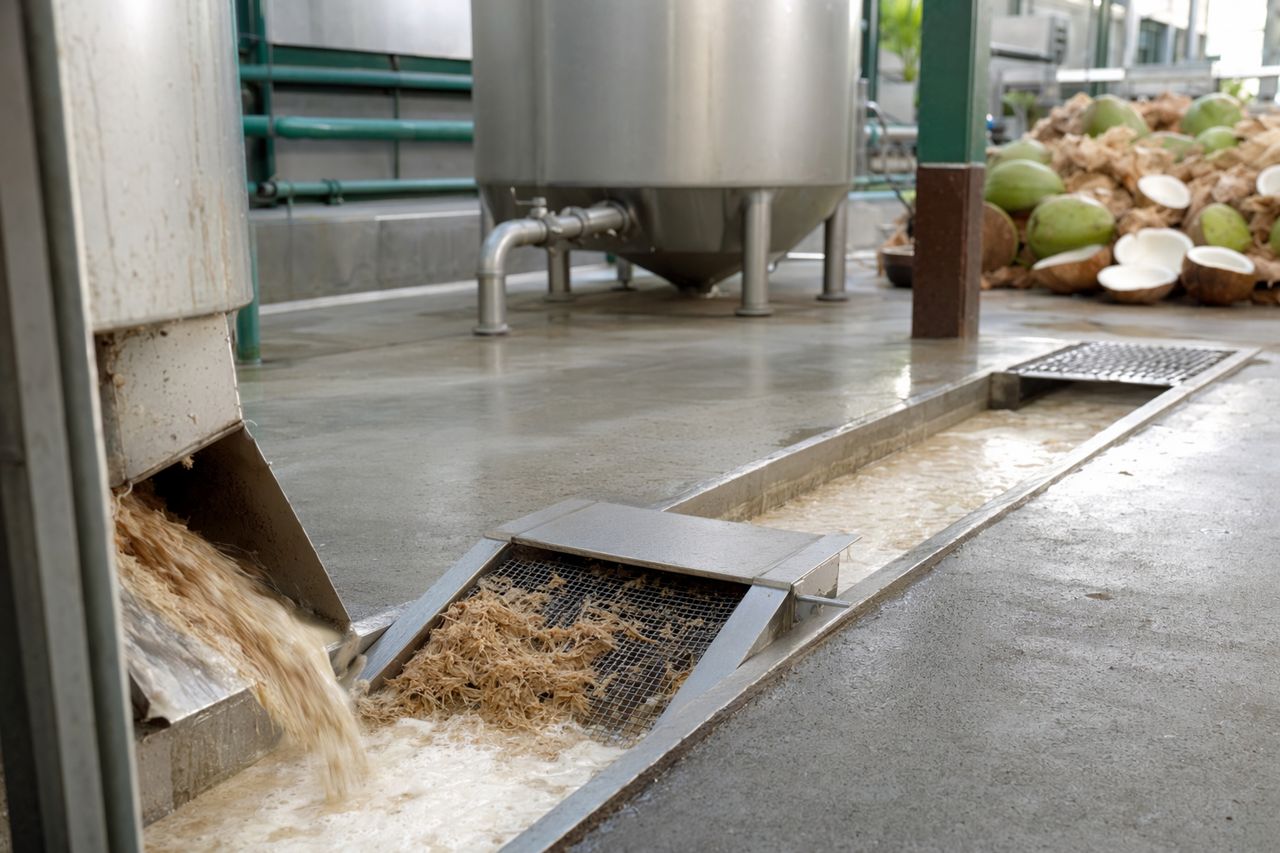
Physical recovery remains one of the strongest COD-reduction tools. Screens, rotary strainers, settling steps, decanters, dissolved air flotation, and fit-for-purpose filtration all perform better when the process is stable upstream.
Focus on these production-side improvements:
- Keep screens clear and prevent blinding from viscous coconut streams
- Avoid sending heavy fiber surges directly to drains
- Balance flow into separators to prevent carryover
- Control viscosity before filtration where process design allows
- Remove floating fat and cream layers before they enter biological treatment
- Route off-spec but recoverable streams to controlled holding, not floor drains
Enzymes can support this work when viscosity, suspended fines, or emulsion behavior are limiting separation. The objective is not to replace mechanical recovery. The objective is to help mechanical recovery work under steadier conditions.
Viscosity control affects wastewater load
Coconut streams can become difficult to pump, screen, clarify, or filter when viscosity is inconsistent. When viscosity rises, operators may compensate with extra dilution, longer cleaning, more aggressive flushing, or premature filter changes. Each response can increase wastewater volume or organic load.
Production-minded viscosity control can reduce:
- Filter blinding
- Separator instability
- Line hold-up
- Product residue left in tanks and pipework
- Cleaning time and rinse intensity
- Batch-to-batch wastewater variation
For plants making coconut milk, coconut cream, coconut beverage base, or coconut ingredient concentrates, enzyme selection should be matched to the product objective. The right program supports throughput and cleanability without pushing the finished product outside specification.
Cleaning discipline is wastewater discipline
A cleaning program should remove residue efficiently, but it should not turn avoidable product loss into wastewater load. Before increasing cleaning intensity, review the basics:
- Are lines fully drained before rinse begins?
- Are tanks designed and operated to minimize heel volume?
- Are valves, bends, and dead legs trapping coconut solids?
- Is product recovery completed before clean-in-place starts?
- Are filters and screens opened before heavy flushing?
- Are operators using water to move solids that should be scraped, screened, or recovered?
Small changes at these points often create measurable operational benefit: less drain loss, lower sludge formation, steadier effluent, and shorter cleaning cycles.
Keep fat out of the biological system
Coconut fat and emulsified cream can be difficult for wastewater systems when they arrive in unstable surges. High fat carryover can increase surface scum, odor, sludge handling pressure, and downstream treatment variability.
Control starts in production:
- Improve separation before discharge points
- Avoid sudden dumping of cream-rich residues
- Capture high-fat flushes separately
- Reduce emulsification during washdown where possible
- Keep temperature and handling conditions consistent enough for planned separation
When enzymatic processing improves extraction and phase behavior upstream, the wastewater plant receives a more manageable stream. That supports uptime beyond the production hall.
Build a practical COD-reduction checklist
A coconut processing plant does not need a complicated program to start improving organic load. It needs disciplined control points.
Process recovery
- Review press cake for retained extractable material
- Recover product from lines before rinsing
- Capture first-rinse streams separately where feasible
- Prevent off-spec coconut streams from going straight to drain
Solids control
- Maintain screens and strainers before they blind
- Remove fiber before it reaches wastewater treatment
- Stabilize feed to decanters and separators
- Control viscosity to support filtration and separation
Cleaning control
- Drain before rinse
- Separate high-strength wash events
- Train operators to identify preventable product-to-drain losses
- Check cleaning sequence data against actual floor observations
Wastewater protection
- Equalize high-strength discharges
- Keep fat surges out of the biological system
- Track sludge formation and odor events back to production causes
- Treat wastewater performance as a production KPI, not only a utility KPI
Where Enzymereach fits
Enzymereach supports coconut processing plants with enzyme programs designed around extraction, viscosity control, separation performance, filtration load, and batch consistency. For wastewater improvement, the value is indirect but operationally important: stronger recovery upstream typically means less organic load downstream.
Our technical discussion usually starts with the plant reality:
- Coconut raw material format and variability
- Target product: milk, cream, beverage base, ingredient slurry, or related stream
- Current bottleneck: yield, viscosity, separation, filter life, cleaning time, or effluent swings
- Existing equipment and process temperatures
- Quality limits for taste, color, mouthfeel, and stability
- Wastewater pain points tied to production events
From there, we help define a plant-appropriate enzyme approach that supports the process instead of complicating it.
The business case is not just lower COD
Reducing organic load can reduce treatment cost, sludge pressure, odor complaints, chemical demand, and compliance risk. But for production managers, the stronger case is often broader:
- More recoverable coconut value stays in product
- Fewer filtration interruptions
- Less uncontrolled dilution
- Shorter or more consistent cleaning windows
- More stable separators and screens
- More predictable wastewater plant loading
- Better alignment between production and utility teams
COD reduction is the visible downstream result. Better process control is the upstream cause.
Request a quote
If your coconut processing plant is dealing with high-strength wash water, retained solids in press cake, heavy filtration load, or inconsistent wastewater performance, Enzymereach can help review the enzyme-fit opportunity.
Use the on-site request a quote form to share your product type, process bottleneck, and target outcome. We will respond with a practical recommendation for your plant conditions.